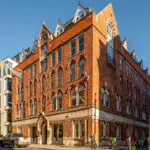

As custodians of some of London’s most iconic buildings, we recognise that preserving heritage and protecting the environment go hand in hand. Today, we’re proud to launch our Net Zero Carbon Routemap, setting out our commitment to achieve net zero emissions by 2050.
Building on strong foundations
Our Environmental, Social and Governance (ESG) Strategy, established in 2023, committed us to becoming a net zero carbon organisation. Since then, we’ve been taking meaningful action. Over the past three years, we’ve invested £28.5 million in improving the energy efficiency of our buildings, achieved improved Energy Performance Certificate ratings on six properties, and transitioned four buildings from gas to environmentally efficient VRF systems.
Understanding our impact has been crucial. Our base year carbon footprint for financial year 2023 stands at 9,883 tonnes of CO2 equivalent. This detailed assessment, covering scope 1, 2, and 3 emissions, provides the baseline from which we’ll measure our progress.
The path ahead
Our routemap sets clear targets aligned with the UK Government’s legally binding net zero commitment. By 2050, we will reduce emissions by at least 90% across our operations and value chain, with any residual emissions neutralised through permanent carbon removals.
We’ve identified our carbon hotspots: capital goods from refurbishment projects account for 39% of our footprint, purchased goods and services represent 25%, and energy use in buildings makes up 34%. These insights shape where we’ll focus our efforts.
Key actions for 2025-2030
Over the next five years, we’re implementing ten key actions:
- Transforming our buildings: We’re developing building-specific action plans to improve energy efficiency and committing to install no new gas boilers in owned buildings from 2030. We’ll specify SKA Gold certification for the majority of new acquisitions and refurbishments, embedding sustainability into every project from the start.
- Reimagining our supply chain: We’re updating our procurement policy to prioritise low-carbon considerations and engaging with our top suppliers to understand their carbon reduction plans. We’re creating a preferred materials register that specifies low-embodied carbon construction materials.
- Empowering our team: We’re rolling out carbon literacy training for all employees, aiming to achieve Carbon Literate Organisation Bronze status in 2026.
- Leading by example: We’ve already replaced our diesel van with an electric vehicle and committed to purchasing no new fossil-fuel-powered vehicles from 2025.
Navigating the challenges
We’re transparent about the challenges ahead. Many of our buildings have listed status, which presents unique constraints when implementing low-carbon technology. Our scope 3 emissions, which represent 73% of our footprint, depend significantly on supply chain decarbonisation. Recent investment in our business may drive portfolio growth, requiring us to decouple emissions from expansion.
These challenges are substantial, but they don’t diminish our commitment. We see them as opportunities to innovate, collaborate with heritage consultants, and use our influence to drive positive change across our supply chain.
A living strategy
This routemap isn’t static. We’ll calculate and report our carbon footprint annually, tracking progress and adjusting our approach as needed. In 2029, we’ll review our targets and develop the next phase of our routemap for 2030-2035, ensuring our strategy evolves with emerging technologies and best practices.
Our promise
As custodians of London’s architectural heritage, we have a responsibility that extends beyond maintaining beautiful buildings. We’re committed to enhancing their environmental performance while preserving their historic character for future generations.
This routemap represents our promise to take meaningful action on climate change, to be transparent about our progress and challenges, and to collaborate with our customers, suppliers, and partners in creating a sustainable future.