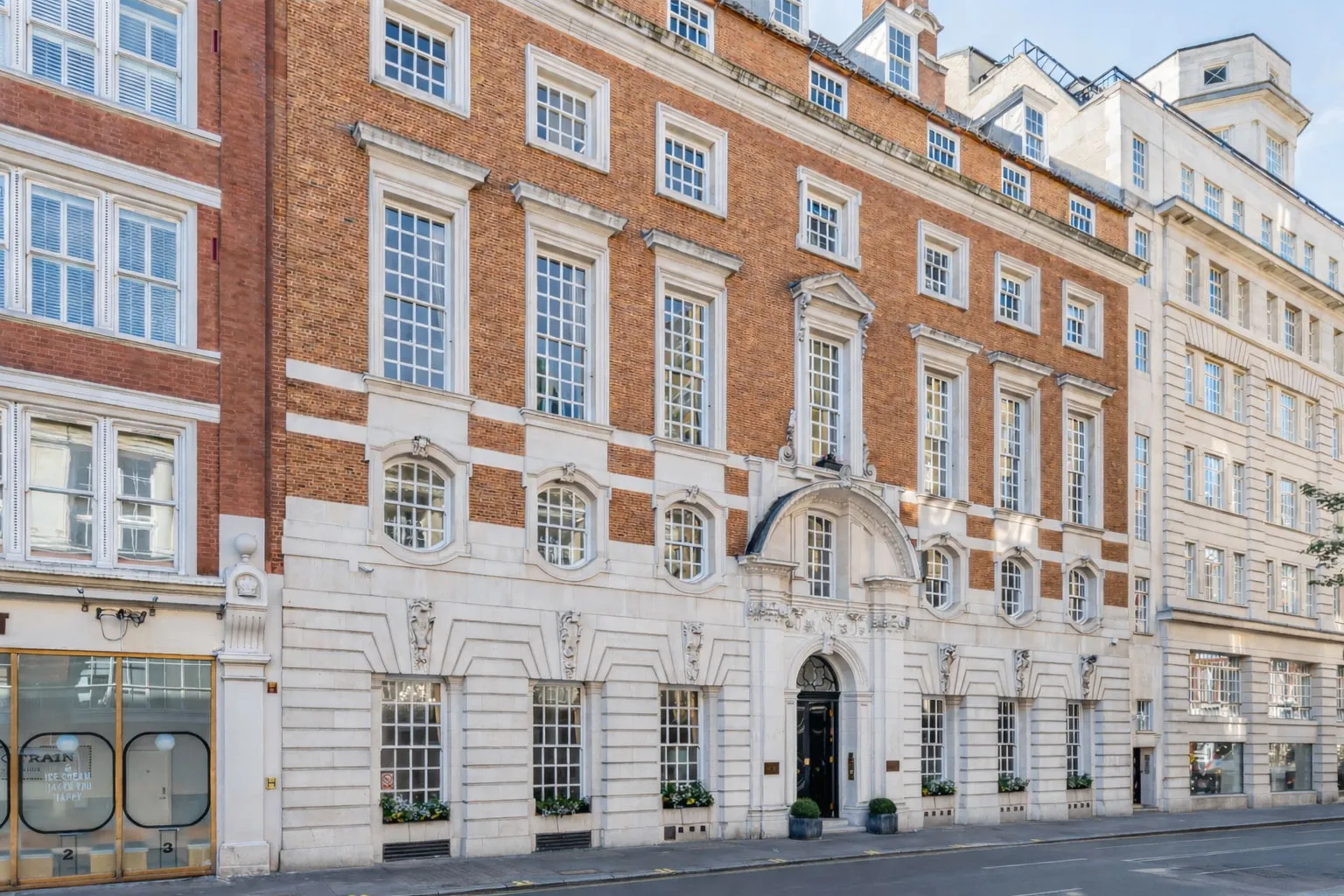
Yes, and in more ways than it did five years ago.
Your address still shapes how clients read your business before they’ve met you, and who you’re likely to meet in the first place. Since March 2024, your registered office address has had to meet stricter requirements.
Whether you’re taking private office space or simply need a London business address, it helps to know what your address says about you, and what it’s now required to do.
Your address is read before you are
People form a view of a business from its postcode, whether you intend them to or not.
But the judgement isn’t necessarily about glamour. It’s about consistency.
A private equity firm at a Mayfair address feels entirely at home. The same firm at a business park address may prompt a question. And questions can cost you momentum when the other party is already deciding how seriously to take you.
The reverse can be true, too. A design studio on Pall Mall may find that its address works slightly against the story it is trying to tell.
So the useful question isn’t “What is the best London business address?”
It’s “Does my address match the claim my business is making?”
For firms in law, finance and professional services, where clients are often buying judgement and expertise they can’t easily inspect, an address is one of the few things they can assess immediately.
Proximity still shapes who you meet
There’s a practical argument underneath the reputational one, and it has survived hybrid working intact.
London’s professional clusters remain well established, with barristers and litigation firms concentrated around Holborn and Chancery Lane and corporate finance centred on the City of London. For private capital, family offices and boutique advisory firms, Mayfair and St James’s continue to be favoured locations.
These clusters persist because of the incidental contact they create: the counterparty you happen to see at lunch, the introduction made in a building you both use, or the meeting you can accept at short notice because it’s a four-minute walk rather than a journey across London.
The market data reflects how much occupiers still value location. Savills recorded average prime City rents of £130.80 per sq ft in the first quarter of 2026, around 40% higher than the same period a year earlier, with West End prime rents reaching £165 per sq ft. Grade A space accounted for the overwhelming majority of Central London take up over the same period.
Businesses continue to place a high value on the right location and standard of building, paying more for both than they did before hybrid working became established.
The building itself
An address is often the first thing a client learns about you. The building is what they remember.
We’ve spent more than 25 years choosing properties in London’s most prestigious neighbourhoods – heritage-rich townhouses in Mayfair, iconic architectural statements in the City, each with its own character and mood. Inside, our interiors are contemporary and timeless, designed to make a lasting impression on the people you invite in.
None of them carry our name. Our spaces are unbranded by design, so the only business on display is yours.
Business address, registered office or virtual office: what’s the difference?
The terms are often used interchangeably, but they mean different things, and many firms use more than one.
Business address
Your business address is the one you present to clients: on your website, email signature, letterhead and business listings. It might be the office your team works from, or an address you use while your team is based elsewhere.
When you might use one: whenever clients, counterparties or search engines need to know where to find you. It’s the address most people will see.
Registered office address
Your registered office address is your company’s official address on the public register at Companies House. It’s where statutory correspondence from Companies House and HMRC is sent, and where legal documents can be served on the company. It must meet the requirements set out below, but it doesn’t have to be where you work.
When you might use one: Every UK limited company and LLP must have a registered office address, and many firms choose a commercial address to avoid using a director’s home as their public company address.
Virtual office
A virtual office is a service that gives your business an address without the need to take desk space, usually with mail handling and options for call answering and meeting room use. At Argyll, registered office use is available as an optional addition to our virtual office service, with meeting rooms booked separately.
When you might use one: if you’re testing the London market from overseas, running a small consultancy, or want a London presence before you need an office of your own.
Not all virtual office addresses are the same
A virtual office address can be a sensible, legitimate choice. If you’re looking for a virtual office in London, there’s no shortage of options. What matters is which one.
Your address isn’t only what you present. It’s also what everyone else registered there presents.
The impression your address creates can also be influenced by the businesses registered there, particularly when publicly available company data is used in automated due diligence.
Providers of registered office and business address services to companies are generally classed as trust or company service providers, and must be supervised for anti-money laundering purposes by HMRC or another supervisory body. The UK’s national risk assessment rates money laundering risk in that sector as high, so when a bank or counterparty runs its own checks, your address forms part of what they review.
You have no say over who else uses the address, but you can choose the provider. It’s worth asking how many companies are registered there, what checks they carry out before accepting new ones, and who supervises them.
How your address affects where you’re found
There’s a discovery argument too, although it’s often overstated.
Google’s own guidance is that businesses with complete and accurate information are more likely to appear in local search results. Accurate address details on your website and relevant business listings are part of that, with any difference between your registered office and trading address made clear.
A mailing-only virtual office is not eligible for a Google Business Profile; offices in coworking premises must meet Google’s requirements for signage, customer visits and staffing by your own team during business hours.
AI assistants are becoming part of the same picture. OpenAI, for example, says ChatGPT search works with third-party providers to supply local information such as nearby business listings. When someone asks for “corporate law firms near Chancery Lane” or “boutique advisory firms in Mayfair”, inconsistent address details can make it harder for these tools to place your business with confidence.
The point isn’t that a prestigious postcode automatically buys you visibility. It’s that an accurate, consistent and verifiable address removes one small obstacle to being found.
Keep the details consistent wherever the same address appears, and update relevant records when it changes.
Questions worth asking before you commit
Before choosing an office or business address, ask yourself:
- Does this address match the way clients in my sector expect a firm like mine to present itself?
- Would a client or counterparty be comfortable coming here, and does the arrival experience reflect the standards we set elsewhere?
- How many other companies are registered at this address, and who vets them?
- Does the address meet the appropriate address requirement, and what supporting documentation can the provider supply?
- If we grow, or want a second location, can this arrangement grow with us?
Choosing an address that works for you
We’ve spent more than 25 years choosing buildings in London’s most prestigious neighbourhoods, from Mayfair and St James’s to the City, Belgravia and Covent Garden.
Our business address services give you a prestigious London address, with mail handled by our on-site teams.
Our London office space is unbranded by design. That means the address in your email signature is simply the address, without another company’s name attached to it.
If you’re weighing up what your address needs to do for your business, our team would be glad to talk it through.
Frequently asked questions
Does an office address still matter if my team works remotely?
Yes. Where your team sits day to day and what your address signals are now separate questions.
Your address continues to inform how clients, banks, regulators and search systems assess your business, regardless of how many days a week anyone is sitting at a desk.
What makes a registered office address appropriate?
Since March 2024, UK companies must maintain an “appropriate address” at which documents delivered to the company would be expected to come to the attention of someone acting on its behalf, and where delivery can be acknowledged. A PO Box alone cannot be used as a registered office address.
Which London postcode is best for my business?
The one that best fits your business, clients and professional network.
Legal firms cluster around Holborn and Chancery Lane, corporate finance in the City, and private capital in Mayfair and St James’s.
Matching your sector’s centre of gravity is likely to carry more weight than choosing the most expensive postcode available.
Can I still use a virtual office as my registered office address in 2026?
Yes. A virtual office remains lawful provided you have permission to use the address and it meets the appropriate address requirement: a physical UK address in the same jurisdiction as your company, where documents reach someone acting on its behalf and delivery can be acknowledged. A PO box alone does not qualify.
Will a virtual address cause problems opening a business bank account?
It can, although not simply because it’s virtual.
Banks may consider the number and nature of businesses associated with an address alongside other information during their checks.
Can I keep my home address off the public register?
Yes. Using a separate registered office and service address can help keep your residential address out of public view, which is one of the more common reasons businesses choose a business address in London. Changing your current address does not automatically remove a home address from historical filings.